peta LiLY
  • ABOUT
  • COURSES
  • Shows
  • BLOG: Dark Clown, Clown plus
  • Contact
  • FAQs for the Clown & Dark Clown course
  • Creative Mentor / Acting Coach / Director
  • ONLINE COURSE INFO
  • What people say about the Clown & Dark Clown course
  • What people say about the Alchemy of Archetypes course
  • What people say about the Commedia dell'Arte course
  • PLAYS and POETRY
  • What people say about the Clown Course
  • Creative Mentor / Acting Coach / Director
  • Comments about the Mime & Physical Expression workshop
  • What people say about the Bill's Idiots Course
  • What people say about the blog

The Comedy of Terrors - Dark Clown & Enforced Performance

9/25/2016

1 Comment

 
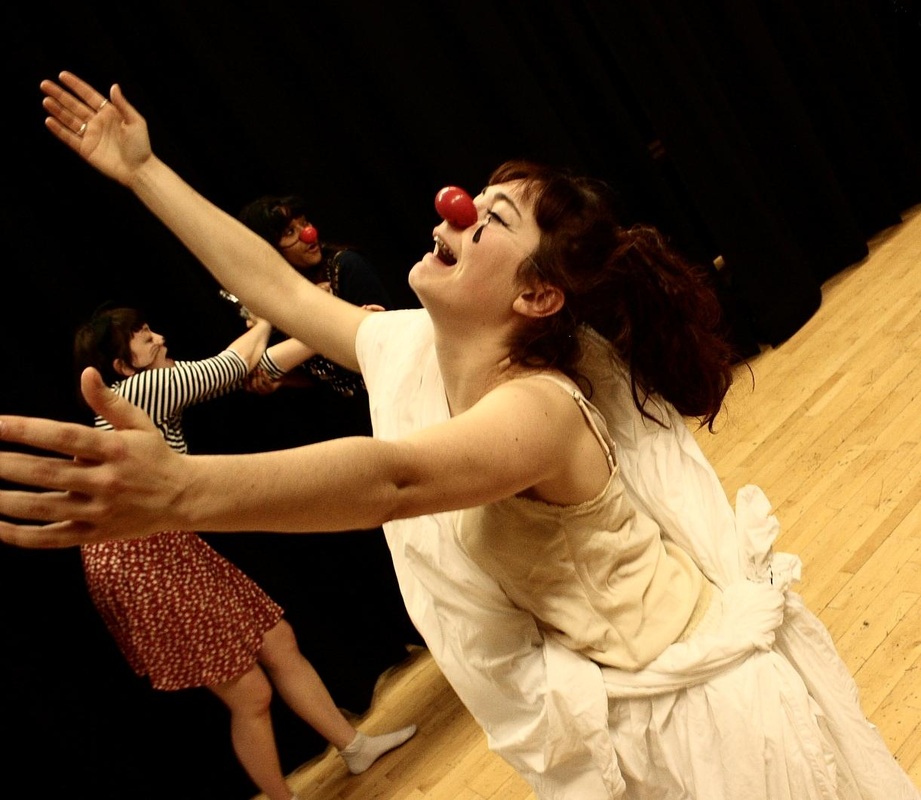
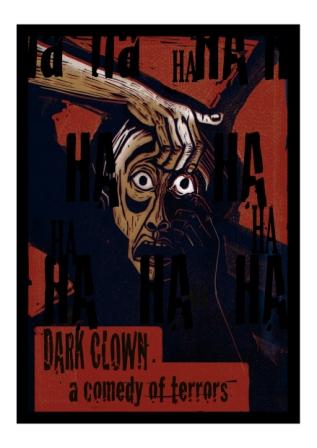
PicturePhotos: Robert Piwko Montage: Peta Lily
​THE COMEDY OF TERRORS - Dark Clown and Enforced Performance
Observations on Dark Clown from the practical research work of director writer performer Peta Lily
 
Based on a talk presented at the LAUGHTER AND TRANSGRESSION SYMPOSIUM at Bath Spa University on the 13th May 2011
​(this was an informal Symposium and the paper is written in an oral delivery style)
 
What does she mean, Dark Clown? What does she mean Enforced Performance? All will be revealed.
 
Firstly ‘normal clown’.
Historically there have been many kinds of clown, but today most people know and study the Le Coq/Gaulier theatre clown who wears or doesn’t wear the small red mask. This clown is not exclusively so, but tends towards the innocent and the naive. It has no past and next to no memory. As in: 'Wow what a nice shiny red button!  bzzt crang ow! (shake of head, double take)
Say, what a nice shiny red button! bzzt crang ow! (shake of head, double take) Gosh look at that nice shiny red button. I wonder what it does?......bzzt crang ow! (shake of head, double take).' And we laugh. And we say ‘look at that idiot, s/he’s so stupid!’
 
Dark Clown provokes a different quality of laughter.
Dark Clown is where the audience laugh
but at the same time they ask themselves,
‘should I really be laughing at this?!’
It’s a laughter with a different feeling in your chest and your gut.
A laughter that at its height, makes you squirm
and can include the red cheeks of shame and projectile tears.
 
After a while researching the Dark Clown I began to think how strange it is - that when the Red Nose Clown trips and falls it gives us pleasure. We want him to trip and fall again, and trip and fall again, for our pleasure, until we are bored….and then we want
another clown
to trip and fall - or do something else for our pleasure.
And we feel totally okay about this. (1)
 
But with the Dark Clown, when the audience laughs
they feel implicated.
 
To explain my use of the term: Dark Clown. It was a phrase I plucked out of the air to make a distinction from the regular clown work I was teaching. (2)
 
Inspirations for the Dark Clown?
Back in the early 1980’s I went to the ICA in London one night to see a production of Pip Simmon’s ‘An Die Musik’ (the title comes from a beautiful German Lieder by Shubert). The piece was set in a prison camp, where the prisoners - musicians and entertainers - are being forced to perform for their captors.
 
But what really was unforgettable was one scene: a man very tall and gangly with a shaved head came forward danced strenuously, desperately looking right at us while simultaneously hitting himself on the head with a metal tea tray. He was singing Hava Nigila, dancing grotesquely and hitting himself on the head repeatedly. It was hilarious and awful, at the same time.
 
I started to add a session on Dark Clown to my Clown workshops. People seemed intrigued and excited by it. We explored extremity. I would ask the performer: could you make us afraid, could you make us afraid that you might hurt yourself, kill yourself, eat yourself?
 
I also explored a kind of cynical clown who has the attitude of contempt, where the performer says or thinks: ‘I knew you’d like that. I knew you’d laugh at that. Is that all it takes?’
 
And I also explored the idea of existential horror - the horror of being alive. Body Horror - the horror of having body parts.
‘Hand! I have a.. Hand! Why?! Hands?!’
 
Another source of inspiration was Lumiere and Son’s show Circus Lumiere. In one scene,
a big clown uses an electric cattle prod to administer shocks
to a small clown – to make us laugh.
The more we laugh the more they feel compelled
to give and take the shocks. And to turn the dial higher.
 
In the workshops I became more and more compelled by the idea
of the dark clown having to make the audience laugh…
or else….
so I began to add in the scenario of a torture camp:
imagine - people are back there being tortured
and then a bell rings they are
thrust out onto a brightly lit stage to perform for their captors.
 
This has become for me the most compelling application or flavour of the Dark Clown work I’ve been researching - the scenario of Enforced Performance.
This was something real that happened in the concentration camps.
Enforced acts of humiliation and confession no doubt happened in Argentinean torture prisons & other places.
Human-trafficked prostitutes have to pretend to be happy or other things for their captors and clients
and memorably, we saw the staged photo stunts as forcibly performed by the prisoners in Guantanamo Bay.
Now this is different because it’s elective, but not so long ago, I glimpsed on television a show called ‘So You Think You Can Dance’.
They showed tight close-ups of people being struck off the show. The humiliation, anger and desolation on their faces was being offered up to us
as entertainment….
 
So I want to say here that in both workshops and performance
I always set up the Dark Clown work very carefully. (3)
 
The intention is not to ridicule suffering or those enduring suffering, but
to offer the watcher the experience of laughing - and feeling troubled by that laughter.
 
Technique
The game of tension and release is one of the main components that underpins laughter. As is the game of contrast and surprise.
And another key factor in Comedy is the concept of truth plus pain.
 
In the red nose clown the game of tension and release has a bouncy flavour. He will scare and delight the audience with his clumsy attempts to ride a wobbly unicycle.
In Red Nose clown training, the teacher will threaten to send off a clown. ‘You’re appalling. Get off!’ The threat of being sent off is aimed to inject more energy into their performance….
Plus it gives them also the opportunity to acknowledge their failure, show us their feelings…
 
We love the clown most when he or she is in deepest in the shit… (4)
we enjoy seeing their humanity at that moment.
 
The Red Nose Clown in these moments sells its silliness, its disappointment, its bossiness, its enthusiasm.
Dark Clown sells its pain, its humiliation and its anguish.
 
In Dark Clown the stakes need to be high. People in workshops often find it hard to get the right degree of intensity - so I invented the shooting gallery exercise. (5)
 
First I teach a repetitive stamping dance that is slightly difficult to perform. The clowns must perform it together in perfect alignment. It’s a machine to create accidents and mistakes. If someone makes a mistake or is insufficiently invested in the situation (that they are performing under fear of pain and punishment), I ask the workshop participants who are seated, ‘if you had to shoot someone in this lineup who would you shoot?’
Now it’s an amazing (and slightly chilling) thing how quickly people get into this. ‘James is smiling, he’s not taking it seriously. Shoot James.’  ‘Alison looks bolshy. Shoot her in the leg. Shoot her in the knee!’ ‘Shoot the person next to her.’
A useful clowning principle is: ‘If they laughed once, they should laugh again’ (Philippe Gaulier). It’s the Clown’s job to create laughter for the audience. So, if the audience laugh when her arm goes funny, then it’s the performer’s job to produce the same exact sound/shape/rhythm to allow them to laugh again. Then a third time for the rule of three etc.
To accelerate the laughter (snowball it), we might even have to shoot her in the arm again. Or in the other arm.
 
And the performer must create a believable verisimilitude of pain and distress.
There is an important distinction to be made between Dark Clown and the Grotesque.
The Dark Clown performer must be open to showing the cost – delivering to the audience eyes containing a believable verisimilitude of horror, distress, pain, shame, guilt, humiliation or combinations thereof. It is this which keeps the audience implicated, keeps them on the hook. If the performer is somehow taking the pain lightly, or enjoying the shock effect they are having, if we are not seeing the ‘cost’ to them of performing some painful or humiliating action – then there may be a shock laugh but it will not be the troubled laughter this work aims at. The grotesque, I have found, may impact the audience, but falls short of implicating them.
 
The Red Nose Clown is like Wile E Coyote – run them over by a steam roller, they pop right back up…
The Dark Clown doesn’t re-inflate after a wounding – they get hurt, they suffer, they bleed and they die.
 
Red Nose is there for the audience, Dark Clown is there because of the audience.
Red Nose Clown is desperately trying to stay onstage.   
Dark Clown is desperately trying to stay alive.    
 
Like the Red Nose Clown the Dark Clown does live vividly in the moment - but in a different way
she is hyper alert because punishment or pain can come in anyway at any moment for any reason
and for no reason.
 
Dark Clown must face horrific uncertainty and impossible choices – psychological torture as well as physical and emotional – think of all the myriad moments when people sold out their relatives and neighbours under torture or under threat of torture – we, as the audience of Dark Clown, get to see that. In the case of the stamping dance - do I hop over or around or on my neighbour in the lineup who has fallen to the floor. Do I try to sing better than my fellow prisoner? Must I continue to dance while that person sobs?
 
All this – done correctly - creates laughter….
Part of this laughter comes from shock and absurdity
& the rest comes from a skillful and well-judged use of rhythm and breath…. People who play Dark Clown must finesse their ability to
play the game of tension and release
because the audience get tired more easily due to the quality of the laughter
and because the context is harsh.
Moments of silliness (and softer rhythms/textures) must be strategically interspersed to relax the audience.
The Dark Clown performer must also be able to access acting skills (specifically, the skills of concentration and imagination):
they must scream or cry in a way that is convincing of pain and terror
but which is also
so strategically rhythmic and musical that it provokes laughter.
 
(At the symposium in Bath there was a moment of audience participation here – call and response laughter, then sobbing, using rhythm and breath.)
 
The importance of rhythm.
Now, here’s a thing. You can create laughter over and above content - through rhythm and breath.
A good stand-up will say that you have to get your audience into the habit of laughter. For example: ‘Anyone in from Cardiff?’ ‘Yes’.
Call and response. I speak and you make a sound, ok? That’s how we’ll proceed.
 
But you see most people don’t know this. People will usually assume they laugh because of content
and this is where the ability to implicate comes in –
 
When you – or I - find that we have laughed at something shocking,
we question ourselves    (those of us who are sane)
and we get to confront our own humanity.
 
I suggest that The Dark Clown is useful, because it provides an opportunity for audiences and performers to engage with some of the dark absurdities and obscenities of this world, when drama and sentiment can fall short of touching us.
Because - the Holocaust, Pol Pot’s regime in Cambodia, these are horrors of such magnitude and incomprehensibility that we are
in danger of numbing out even as we try to contemplate them.
Watching that character singing Hava Nigila – doing anything he could to survive, I could both see and squirm at the ghastly subtraction of his dignity.
And simultaneously
release the pent up energy of my own guilt through this vigorous form of laughter…..which at a physiological level shares something with the act of sobbing.
 
In Practice/Performance
In the year 2000 I was asked to create a production in the style of Dark Clown – I created a piece in Hong Kong called Hamlet or Die – where prisoners in a torture regime are compelled to perform Hamlet for their captors.
 
I am going to give now a much abbreviated picture of the show
(which includes something of the set up
required for an Enforced Performance piece).
 
The audience, on their way into the auditorium, must walk past a small cell-like room where the controller is sitting on the loo smoking his pipe and reading a newspaper.
 
Inside the theatre blacks are stripped out. (The walls of the theatre in Hong Kong were white ceramic tiles - the building used to be a dairy).
Over the exit sign a large NO was scrawled and ‘barbed wire’ looped round the door. It’s important that there seems to be no escape. On the stage left wall, a large almost cartoon-like switch to deliver electric shocks.
A guard in Wellington boots holds a long piece of rubber tubing as truncheon.
 
When the audience is seated, the controller enters across the stage, up the central aisle and takes his place at a desk specially installed in the audience. He leans fwd and taps on the microphone and he says ‘bring on the clowns.’
 
The stage has a trap door which is opened. Screams emit. The guard beats the floor with his truncheon. Figures emerge onstage.
 
We witness a ‘warm –up’ consisting of punishing and pointless ‘races’.
At a certain point: a drum roll and a small red velvet drape drops….
 
An announcement :
'For your edification, the sad story of Hamlet - the prince who thought too much.
Don't think too much.      
It can only end badly.'   
 
Panic ensues
incomprehension at the obscenity of this exercise
random acts of physical and mental cruelty are inflicted on the poor prisoners
who all throughout are aware of the heartlessness of the audience who continue watching everything that’s happening to them.
 
While the actor invested with the role of Hamlet is being beaten behind the little red drape for his resistance  boof ahh   boof ahh   boof ahh!
the Controller takes a moment to come down onto the stage. He sings a cheesy sentimental pop song and gets someone in the audience to sing along into the mike. We applaud the volunteer, the controller takes a bow….
then
turns back towards the damaged and shivering prisoners and says ‘See, that’s what the people want, they want to be entertained!’
 
A Dark Clown show needs to be as funny as it is horrific. I planned the next moment to provoke a gasp of shock, but found the call and response habit was so well-installed that it elicited a burst of laughter.
 
The beaten Hamlet crawls onstage in agony to join the scene where Ophelia is returning her letters.
The stage-manager prisoner has had to step in for an irrevocably traumatised young Ophelia…
The prisoner playing Polonius sticks his head out from his ‘hiding’ place and angrily prompts Hamlet: ‘answer her, you have a speech here!’
 
The female stage manager kneels with the text over the supine Hamlet…
She strains to hear his response… their faces are close,
the moment is quite tender…
And Hamlet, with difficulty, raises his head –
And coughs blood up onto her face…
And
the audience
laughs.
 
The Controller pats the mic
Act 4 Scene 7. Number 338, bring the bucket!
Ophelia. Drowns.
 
But Ophelia drowns by accident!      (says the translator, prisoner number 338, looking frantically through the book, finger on the page)
 
Controller: 'This is theatre, nothing happens by accident. Drown the girl.'
338, horrified:  'I can’t.'
 
'Number 338, do you want to take the role?'
The guard pushes 338’s head in the bucket. Holds it there.
(Pause. She emerges gasping.)
338: ‘No, I do not wish to take the role…’
 
‘Act 5 Scene 2. The queen drinks poison.’
The guard grabs Number 269 and a bottle of toilet duck.
‘NO NO! Let me dance for you.
Let me do it! I’ll drown the girl.’
 
The controller returns to the stage:
‘So, how would YOU have it end? Who would you have poisoned, stabbed, drowned?
Think about it....  (points at head)
but don’t think too much…’  (wags finger)
 
If tragedy offers us pity and fear to heal and cleanse the emotions, perhaps Dark Clown brings horror, shame and shock - to fully encompass the pain of watching, unharmed, the suffering of others.
 
 
© PETA LiLY May 2011 with revisions and elaborations 17 February 2013
 
 
(1) The Red Nose Clown performer must fall so skilfully that no concern of injury enters the audience’s mind. If a clown is dealt a blow, or traps his/her finger, then they must rub the spot or shake the hand. The Red Nose Clown must have an inner predisposition to optimism and recovery and in each moment an opportunity to be ‘born’ again. Comedy is regenerative. Life goes on, unstoppably. It is also useful for the Clown to value the audience’s experience over their own – what I mean by that is - that their sadness or hurt must be delivered to the audience while it’s fresh (because it’s the clown’s job to show its humanity), but the performer clown must be prepared to jettison that emotion when the audience needs something else. The Clown is like a healthy child who drops their ice cream, cries, sees a donkey and is all laughter even as the teardrops sit fat upon their lashes. The Clown needs to be an expert at natural emotional release.
 
(2) Someone mentioned to me when I was preparing this talk in 2011, that Dark Clown is a term already in use with regard to Samuel Beckett’s characters. I am not a skilled academic researcher but so far, I can find no reference to that – if you know about other important usages of Dark Clown, please let me know. Many expect Dark Clown to be Scary Clown, Halloween Clown. There is also what I would call Bad Clown (as in ‘Bad Santa’) – I have not seen them live but the fascinating Australian Clowns Blotto and Whacko seem to be to be well-described this way. (One day I’d like to explore this style of clowning more). Other practitioners may teach or perform other things under the title of Dark Clown. That’s fine. I just want to point out that when I refer to the term here in this paper, I specifically refer to the body or practical research I have been involved in since the 1980’s.  
 
(3) In a workshop, I always give a short talk that includes the inspirations for the work, the aims of the work and instructions on what to do in the case of someone becoming upset during the process. I explain upset may occur because a) performers sometimes become upset when shifting into certain emotional territory they have not yet exercised b) something personal might come up – which is pretty much the same as (a) and c) the material is dark – step one is to imaginatively understand the stakes of a life or death scenario sufficiently so that it can be played believably and skillfully. At this point in the process it may happen that there is no laughter – not until the performer adds to this the skills of openness, audience awareness, and laughter creation and control via rhythm, texture, inflection, vocal range, energy management and musicality.
A participant recently said, during a class ‘But it’s just horror!’ I replied: ‘Yes, horror, but with the skillful application of rhythm (and use of the ‘rules’ of repetition, contrast and suspension) so as to cause the kind of laughter where the audience laughs and at the same times questions themselves for laughing. That’s the aim.’
 
(4) Philippe Gaulier, Clown and theatre skills Master, said this, or something like it; ‘We love the clown the most when (s)he has a shit in the pants.’
 
(5) Please note that this is an exercise not a lazzi.  And it’s not how the audience is encouraged or intended to respond in a performance situation.
The seated students participate verbally in the decision-making in the interests of understanding the unpredictable and terrifying nature of the ‘world’. The aim of the exercise is to raise the stakes for the performer so they can release into the emotional spectrum of the Dark Clown.
 
 
General note
For me a key distinction is that I am not seeking the grotesque. That is why the Dark Clown performer must be open to showing the cost – delivering to the audience eyes containing a believable verisimilitude of horror, distress, pain, shame, guilt, humiliation or combinations thereof. It is this which keeps the audience implicated, keeps them on the hook. If the performer is somehow taking the pain lightly, or enjoying the shock effect they are having, if we are not seeing the ‘cost’ to them of performing the humiliating or punishing action – then there may be a shock laugh but it will not be the troubled laughter this work aims at. The grotesque, I have found, may impact the audience, but falls short of implicating them.

1 Comment

exciting news

7/19/2016

0 Comments

 
Picture
It happened!

A special version of the the Clown and Dark Clown workshop was recently filmed towards a documentary (so far awaiting a title). This image of film-maker Robert Golden
 capturing the action is by Robert Piwko Photography.  This documentary is being made possible by a small but extremely valuable grant from RADA and the CDD. The film is in post production now - there will be more news as it happens.

Thanks to the amazing participants - one of whom said:
​

‘We got through so much with no feel of rush and with very little pain…the seeing and being seen reminders throughout kept me more present than I have been in the past.

I felt very safe throughout the two days. I thought you gave a very helpful and reassuring amount of direction, which in turn made a more comfortable environment and therefore better work produced to be learnt from by clown and audience. I found a different kind of stillness within the world of the dark clown.

One thought I had was - Being fake happy is awfully depressing, but being fake sad is wonderfully fun.'
- Hatty Ashton, Performer


0 Comments

Clowns and Power Symposium Circomedia October 2015

11/29/2015

0 Comments

 
Bristol-based author and practitioner Bim Mason set up a Symposium this year.

You can hear him speak, and also listen to practitioners Holly Stoppit and Hilary Ramsden. In the audience were the very very talented Angela de Castro and Tweedy the Clown, also Maggie irving who has a fascinating and courageous Feminist Clown practice.

Bim sets up the theme, I speak for a bit then Holly speaks about Clown work applied to therapeutic situations and Hilary speaks about the Rebel Clown Army members of which take part in political action.

The video is not wonderfully synched, unfortunately, but the audio seems largely ok.
Go here:  https://vimeo.com/143601205

And you can read about Bim's new book Provocation in Popular Culture here.

Enjoy!
0 Comments

on Tibetan Buddhism, Horror and Dark Clown

6/23/2015

3 Comments

 
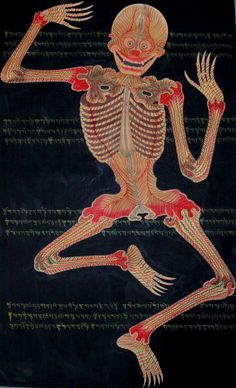
Pictureone of the 'Lords of the Cemetery'


In my paper ‘The Comedy of Terrors, Dark Clown and Enforced Performance’, I suggest that ‘the Dark Clown is useful, because it provides an opportunity for audiences and performers to engage with some of the dark absurdities and obscenities of this world, when drama and sentiment can fall short of touching us. The Holocaust, Pol Pot’s regime in Cambodia, and more recent events are horrors of such magnitude and incomprehensibility that we are in danger of numbing out even as we try to contemplate them.’


When I introduce Dark Clown, I always describe to groups a particular scene of Pip Simmonds’ 1980’s production An die Musik, where a performer plays a man in a prison camp dancing for his life. He is humiliated, desperate to stay alive and horrified to see what he has been driven to.  Watching this scene, I had the privilege of being able to both squirm at the ghastly subtraction of his dignity, and also to vividly witness it. Simultaneously I was able to release the pent up energy of my own guilt through this vigorous form of laughter - which at a physiological level shares something with the act of sobbing.

 
Dark Clown is a performance style, not a spiritual practice. It is a challenging yet rewarding work to teach. Because of its dark content and unusual nature, sometimes people become upset and sometimes questions are raised. I have created an introduction to the work that explains that upset may possibly happen and how to proceed if it does. I have also found a way to give the right information and framework for the work, making it clear that the work is best experienced rather than described – we progress towards it step by step. Until all the work has been done, discussion is too hypothetical to be useful. Once the work has been done, most would-be questions been resolved.


It is natural that some people sometimes become upset. 1 the content is dark, 2 the work requires a certain extremity of physicality 3 the work requires an imaginative investment in circumstances chosen to create sufficiently high stakes for the performer to release into the rhythms and states of the Dark Clown 4 sometimes people have events in their lives that get triggered by a detail of the work. Usually a glass of water and a breath outside the room is enough for people to be able to return to the work.


Sometimes fear arises from people’s horror that they might be making light of the terrible suffering of others. And that fear can be manifested in a question or a resistant statement. I always clarify, with emphasis, when teaching Dark Clown, that my intention is not to make fun of suffering or to make fun of those who have suffered. It is my intention to give audiences the experience of finding themselves laughing and at the same time - or a beat later - to feel terrible that they have laughed.

 
But occasionally, a course participant’s emotions surge, and despite the information in introduction – they verbalise a reaction along the lines of: 'but this work is wrong!’ or 'you / I cannot laugh at this’.

 
In these moments the conversation has to become wider still. And last year it occurred to me to mention to a troubled course participant the possibility of a resonance with Tantric contemplation of horror. I found this blog entry on 'Disgust, horror, and Western Buddhism’ – edited here by me (with apologies and credit and thanks to the author - please see the link to the full blog below). There's a preamble then it mentions 'tantric transformation':

 
‘There are two fundamental approaches in Buddhism. One is renunciation…you lessen the defiled emotions …by avoiding the things that provoke them. Then you use meditation to cut off the remainder.

There is a clear Buddhist logic to this; you can understand how renunciation ends suffering by extinguishing negative emotions.

The other approach is tantric transformation. Externally, you avoid nothing. Internally, you don’t try to get rid of negative emotions; you might even deliberately intensify them. Instead, you transform your relationship with them, so that they cease to be problems.….

Again, there is a clear Buddhist logic. If you enjoy everything, there is no suffering.

…Horror (is) as important in Tantra as in renunciate Buddhism.

The key is the realization of emptiness—the fact that things have no inherent nature. Nothing is disgusting on its own account. Disgust is just your emotional response to it. With practice, you can break your habitual perception-emotion linkage.

The most commonly-known tantric corpse practice is chöd. Ideally chöd should be practiced in a charnel ground. There you visualize your own violent death, as horrifying as possible. Then you serve your dead body as a feast for all beings, who find it utterly delicious. Chöd transforms horror into fearlessness, and transforms revulsion for death and corpses into generosity.

Chöd is just the tip of the iceberg. The tantric scriptures are full of horrifying stories and images. Tantric Buddhist art often depicts corpses or parts of corpses. Human bones are used in most tantric rituals.

....Death was taboo in the West during the formative years for leading Western Buddhist teachers. You were supposed to pretend it didn’t exist. The traditional rituals that had made dying a community event were abandoned. Death became a private, hidden, shameful matter....

Resistance to corpse practice is a Western cultural thing. Corpse practice is directly aligned with the essential principles of Buddhism. It is a powerful tool for either renunciation or tantric transformation.’

see the full blog post here:
http://meaningness.wordpress.com/2011/07/22/disgust-horror-western-buddhism/

There is an other spiritual practice that is worth mentioning here, for people who become distressed, or fear becoming distressed doing Dark Clown work.

I came across the practice of Tonglen in a book I read by Pema Chödrön, ‘When things fall apart’. She mentioned that when we suffer, we often make it more persistent and painful by resistance and / or efforting to escape. I was shocked when she advised to breathe in the mental or physical pain – ‘won’t that be harmful to my body?’ I worried. Then I tried it. Chödrön advised to breathe it in on behalf of others who are suffering something similar and to breathe out relief for them.

In this video she advises you can go straight to the suffering of others – breathe it in and then breathe out the appropriate relief for them.

 People report the Dark Clown work is compelling and liberating to play – and often report that it is cathartic to witness.

In the terrible regimes mentioned in the first paragraph, psychological torture goes hand in hand with physical torture and deprivation.
People have been called to make  terrible choices, or reduced to the point where under pressure and shock they act out of self interest – we can only imagine their suffering. But rather than numbing out because the horror is so great we can at least see these events, these terrible moments of humanity, the beats of shame and guilt and horror that happened to people whose stories may have been lost or never seen. We can, albeit long after the fact, dignify this suffering by being a witness to its verisimilitude. And just maybe that counts for something. As Rust Cohle said in Series One of True Detective - 'and I will not look away’.


...I know I've mentioned this quote before - it's too good not to repeat.

3 Comments

enforced performance and the Dark Clown

3/1/2015

0 Comments

 
a poem on the Dark Clown compare and contrast with the Clown poem in the 21/11/2015 post.

​Dark Clown Poem

the baton / the gun / the alarm / the knife

the compliant will inherit the next

30 seconds of life

the impossible choice

in blinding light / in dirty trousers / deaf with fright

the way we flinch 

the way we quake

the now point-pitched

the past a mistake

and no escape and no escape

and no escape and no escape

and oh, the terrible lengths we go

we jitter and dance

we splutter and moan

steamrollered by force

we scream ourselves hoarse

blink out dying messages like Morse

we betray we betray we betray we betray

open the bomb bay doors

and away

dignity / honour / pity / grace

all depthless fall

into depthless grey

the cable / the iron bar / the tank / the knife

the compliant will inherit the next

30 seconds of life

the impossible choice

in blinding light / in dirty trousers / deaf with fright

0 Comments

further adventures in catharsis!

1/27/2015

0 Comments

 
oh the briliance of TED talks and their very helpful transcripts - this is the elsewhere mentioned Chris Bliss talk 'Comedy is translation'.

Sometimes people react to the Dark Clown work, saying: 'how can this be funny?!' Actually they usually say: 'but this isn't funny' or: 'I don't see how this can be funny!' or: I don't know where this is going! - and they usually say this at a point in the work when I am getting the students to experience the high stakes necessary for the Dark Clown state to be spontaneously released (or for the performer to be able to have pretended sufficiently to release naturally in to extreme yet believable (yet rhythmically, strategically and musically presented) expressions of pain, horror, guilt etc) - phew, still with me?

But I am a huge believer in the power of Comedy to at least have the potential to change minds or to shake up people's thinking.  If you are interested in getting people along to see your show, it's of advantage to have a few laughs. It's useful in more than one  way to deal with serious topics in a comic way.

At around 2.37 in the TED talk Chris Bliss says:

'...when your opening line of communication is, "Hey, listen up, because I'm about to drop some serious knowledge on you," it's amazing how quickly you'll discover both ice and the firing squad.

Finally, after about 10 years of alienating friends and strangers alike, I finally got it, a new personal truth all my own, that if I was going to ever communicate well with other people the ideas that I was gaining, I'd better find a different way of going about it. And that's when I discovered comedy.

Now comedy travels along a distinct wavelength from other forms of language. If I had to place it on an arbitrary spectrum, I'd say it falls somewhere between poetry and lies. And I'm not talking about all comedy here, because, clearly, there's plenty of humor that colors safely within the lines of what we already think and feel. What I want to talk about is the unique ability that the best comedy and satire has at circumventing our ingrained perspectives -- comedy as the philosopher's stone. It takes the base metal of our conventional wisdom and transforms it through ridicule into a different way of seeing and ultimately being in the world.'

Then later on, at 7.50

'A great piece of comedy is a verbal magic trick, where you think it's going over here and then all of a sudden you're transported over here. And there's this mental delight that's followed by the physical response of laughter, which, not coincidentally, releases endorphins in the brain. And just like that, you've been seduced into a different way of looking at something because the endorphins have brought down your defenses. This is the exact opposite of the way that anger and fear and panic, all of the flight-or-fight responses, operate. Flight-or-fight releases adrenalin, which throws our walls up sky-high. And the comedy comes along, dealing with a lot of the same areas where our defenses are the strongest -- race, religion, politics, sexuality -- only by approaching them through humor instead of adrenalin, we get endorphins and the alchemy of laughter turns our walls into windows, revealing a fresh and unexpected point of view.'

Full talk transcript here, thank you TED and thank you Chris Bliss!


0 Comments

the catharsis of laughter

1/18/2015

0 Comments

 
flow. it's important. anything that is held or suppressed is not only not available to be used, but pulls on our other resources.

As I often say when giving the introduction to Dark Clown work, I was not brought to the work by a moral concern. In my thinking, artists and creatives (i.e. read all of humanity) are driven by impulses which compel us. I used to love Iris Murdoch's novels - she would write from within the mind of a character. We are with them as they walk to the other character's door, as they inwardly debate, declare their intentions and detail their reasoning and evidencing and then the door opens and they say and do something utterly else.

So a compulsion of a flavour - a flavour of being, a flavour of laughter - compelled me to try to recreate the conditions whereby I , and others, might share that flavour. Obeying the flow.

And as the work developed and progressed I found that the exercises provided a way for us to see the moments of humanity of people making impossible choices under stress, for example, of people in the moment just after when, out of fear and force,  they betrayed another person or surrendered a level of their own dignity. And that seemed to me to have some human value.

Some course participants have reported to me that they feel their energy and imagination opening up; their performances deepening, after they have challenged themselves with the Dark Clown work. More permission to be. More emotional freedom, more understanding of the human condition - more flow. I have just listened to a TED talk on Compassion, where it compassion is described as 'curiosity without assumptions'. When we can look at difficult things without fear or judging - I think it's useful.

(again, when things are shut off we lose flow).

I often given this basic one-line intro to the Dark Clown work: 'it's when you laugh, but at the same time think - should I really be laughing at this?' We are happy to watch the Red Nose clown be hit or be afraid, and with the Dark Clown its suffering prompts the reflex of laughter, but in a more loaded way.
Please note: I always clearly state with the DC work that 'it is not my intention to make fun of suffering or people who have or who are suffering, but to give the audience the opportunity to laugh, and feel troubled by their laughter.' (I feel that is theatre can make us self-reflect, then it is on point.)

John-Paul Zaccarini is a circus performer who has done a PhD applying psychotherapy to circus: 'Circo-therapy'. He works on the principle that opening up an artist to the deeper sources of their creative choices, can enrich both the performer and the work. As part of his research, John-Paul interviewed me some time ago, and kept asking where the roots of the work lay. After a while, I found myself talking, in true therapeutic mode(!) about a moment in my childhood when my three-year old self had retaliated against my older brother's meanness by telling on him. I watched in horror as my father chased my brother around the small bedroom with a wound-up stockwhip.

Once when devising Dark Clown show 'Hamlet or Die', I stepped in for a moment to cover the lines for a cast member who was late arriving to rehearsal. I had written the script, and as I say, was only stepping in just for a few moments simply to provide the lines so the rhythm of the scene could progress - that is to say, I was not at all emotionally invested in the part - when suddenly tears spurted from my eyes as I witnessed another character in the piece being threatened, due to 'my' character's inaction (the play is full of 'impossible choices'). An automatic reaction to the helpless witnessing of suffering of the other.


So the the arena of Dark Clown and its troubled laughter provokes us to question, but it also provides a further function. A function of release (return to flow) provided for those of us who have been helpless witnesses to suffering - to witness again the horror; to revisit, in a theatrical arena, all the powerlessness and guilt and shock and pity and regret and horror. Catharsis. I imagine and hope this same cathartic function can be extended to those of us unable to have any satisfactory feeling response - as we safely read articles in papers or on the internet - to the suffering of others (e
specially when our busy lives don't give us time and space to do so).

Some events in the world are so extreme; so appallingly absurd, that tears do not discharge enough. W
ith Dark Clown, setting up the conditions to allow laughter (expert use rhythm and surprise), and using the 'dreamspace' of theatre, it is possible to create laughter opportunities in dark contexts which point up the absurdities of horror and release the pent up stance of bracing ourselves against the dark.

The reflex of 'recognition' (a laughter trigger)  may help (at some level) to acknowledge a situation. And the vigorous activity of laughter can shake loose  and dissipate the stuck and static energies of guilt and dread.  Many people having done the Dark Clown work in a workshop with me return to taste the work again. They report to me how at the work helped unblock their feelings - to move beyond the frozen, reactive state of fear and shock ('It's too horrible to think about' 'this is awful!') to be able to look and feel and think about terrible events with a fuller sense of themselves and the world. And from that place to have the potential, as an artist, to put these things before an audience to so as to afford them the experience of being surprised into questioning themselves (or questioning human nature), and also to access this particularly vigorous physical release of laughter.
(A friend and colleague, Commedia dell'Arte expert Peter Jordan points out that the relationship between sobbing and laughter is at times closer than we think.)

Life is not polarised into happy and sad. There are many flavours to taste, and tasting them can provide a fuller experience of our humanity.

Picture
Clown student told to come back dressed as Medea - photograph by Nick Cowell
0 Comments

... and Dark Clown?

1/11/2015

1 Comment

 
Pictureillustration: charlottebiszewski.com
I had an experience back in the 80’s watching a show at the ICA – Pip Simmonds’ Group’s production of 'An Die Musik'. I described it in a paper I gave at Bath Spa University at a symposium on Laughter and Transgression: The Comedy of Terrors - Dark Clown and Enforced performance.

One scene from 'An Die Musik' had a huge impact on me. A prisoner eyeballs us, the audience, as he desperately and grotesquely dances, all the while hitting himself over the head with a metal tea tray - once horrific and hilarious. The intense nature of the rapport between performer and audience at that moment compelled me. And so did the unsettling quality of the laughter, we laughed, while at the same time thinking 'I shouldn’t be laughing at this’.

I was teaching clown regularly and I began asking students on day 2: ‘would you like to explore something? I am working on something and I am calling it Dark Clown.’ I plucked this name out of the air out of convenience. I sometimes meet people who seem to think there is a tradition of Dark Clown* but so far in my research (mind you I am not an academic) I have found no reference to it, other than a Korean Rock Band bearing that name.

I explored extremity: can you do something really extreme physically? Can you try to eat yourself? Can you be horrified that there are holes in your body?

I explored contempt: when the audience laughs can you look at them with tired contempt and the thought ‘I knew you’d laugh at that’ or ‘oh, so you are laughing at that, I suppose I have to do it again.’ We imagined this jaded performer who has seem it all and is unsurprisable – I noticed that this seemed to work best when there was some compulsion to perform. The performer is stuck in some nightmarish reality, some absurd world where they must come on and do this.

I explored outsiders. I made a devised piece in Brighton ‘Something From Nothing’, where a group of ‘homeless’ take over the theatre. I used to give the instruction: ‘This is about us, the 'Pack' versus the them of the audience. You’d rather be punched in the face by one of your group than achieve the audience’s approval.’

(The work is distinct from Bouffon because Bouffon plays satire and the Dark Clown has not the luxury of this option. I will say more about that in a future post.)

Gradually I began to realise that the compulsion to perform was important and I developed a key exercise – the lineup and the stamping dance forward…basically a shooting gallery where, if the stakes were insufficiently high, someone would need to be shot. Hyper vigilance was key. I say: ‘Sometimes they intend to punish James, and they do it by shooting Jessica (the person next to him).  Sometimes they intend to shoot John but they miss and shoot Alan.’ I find it ironic and strangely satisfying that this often creates awareness of the other performers more quickly and efficiently and quickly than in the Red Nose work!

I also have a document listing differences between Clown and Dark Clown - perhaps for a future post.

People would ask me: ‘Could you do a show in Dark Clown?’ and I would reply: ‘I don’t know it’s very dark, perhaps a scene in a show…’ Then Mime Lab in Hong Kong asked me to do a show in Dark Clown style and I created devised piece 'Hamlet or Die'. (Prisoners in a torture regime are forced to perform Hamlet). I got to practice applying my knowledge of rhythm management for laughter provocation, so much so that a moment I had imagined provoking an exhalation of horror, instead produced the ‘ha ha ha’ of shock (shock being the darker form of the clown key ingredient: surprise).

I began an advanced meditation programme roughly around 2002 – 2006. I stopped teaching the work for a while, thinking it too dark. Luckily a few years back an actor I met asked: ‘Say, do you ever do your Dark Clown workshops?’ And I started again.

And I’ve not looked back – people find it compelling and liberating, so they tell me.

I remember a conversation with friend and colleague Peter Jordan, Commedia dell'Arte expert. He made a link between laughter and sobbing and I have found that useful in the work. I find the work cathartic. While Red Nose clown lets us visit wonder, silliness, bossiness, fussiness, craziness, the Dark Clown lets us visit shame, guilt, pain, dread, horror.

My friend John-Paul Zaccarrini (a circus performer) has retrained as a therapist and now practices something he calls Circo-Analysis. He interviewed me as part of his work and had me tracing the roots of this work back to childhood, watching my brother being beaten by my bully of a father. And living under that parent’s regime of capricious force. As a child/young adult information about the Holocaust affected me greatly  and when I was older, torture regimes continued to horrify me. I guess the Dark Clown work has been a part of my coming to grips with the horror of the world. There is a practice in Tibet of contemplating horrors. As Rust Cohle says in 'True Detective’: 'And I will not look away’.


*
(I looked for references to Samuel Beckett and I see 'clown' and 'dark comedy', but no reference to 'Dark Clown'. Others mention the Russian company 'Derevo'. I only saw one Derevo show, 'Harlekin', and that was just a few years ago. I explain this not to claim ownership of the term 'Dark Clown', or to proclaim a single 'right' form of dark flavoured clowning, only to distinguish the body of exercises and concepts I specifically developed and use which is what I mean when I use the term Dark Clown and teach it. The work was inspired by the moment I describe at the top of this post, and further inspiration  added by the Clown scene in Circus Lumiere's wonderful 'Circus Lumiere', although long before that, seeds were sown by the 1969 film 'They Shoot Horses Don't They' about Marathon dancing in America in the 1930's ).


1 Comment
Forward>>

    SEARCH by Category - scroll below

    This blog covers my Clown, Dark Clown, Comedy, and Theatre Making practices.

    ​Buy me a Ko-fi?
    I am writing a book on Dark Clown. If you enjoy the posts here, I'd love your support on my Ko-fi page. Your donation - even a small one - will help pay for time, editors, proof readers, books to inform context etc.
    ​ Thank you!
     

     https://ko-fi.com/petalily 

    30 years of practical research has created a new genre: Dark Clown. The Comedy of Terrors - Dark Clown & Enforced Performance was delivered at Bath Spa University. The work is cited in Clown (readings in theatre practice) by Jon Davison.
    ​

    Images above: Tiff Wear, Robert Piwko, Douglas Robertson, PL and Graham Fudger. Illustration by
    Charlotte Biszewski. Mask: Alexander McPherson.

    Categories

    All
    Absurd
    Absurdity
    Absurd Theatre
    Acceptance
    Accept Everything
    Acting
    Actioning
    Actions
    Adaptation
    Adrenal Surge
    Adversity
    Aesthetic
    All Over Lovely
    Amygdala
    Anais NIn
    An Die Musik
    Archetypes
    Aristotle's Poetics
    Arnold Mindell
    Audience
    Autobiographical Theatre
    Avner The Eccentric
    Awareness
    Backstory
    Bafflement
    Beats
    Believable Verisimilitude Of Pain And Distress
    Benefits To The Actor
    Big And Small
    Bim Mason
    Body Mask
    Bouffon
    Breath
    Breathing
    Brene Brown
    Buster Keaton
    Buzzer Exercise
    Calibration
    Call And Response
    Carlo Boso
    Carthasis Of Laughter
    Casting The Net
    Catharsis
    Chaplin
    Character
    Charlie Brooker
    Chastity Belt
    Chinese Clown
    Choric
    Circo-therapy
    Circus
    Circus Lumiere
    Claire Dowie
    Clarity
    Clock
    Clown
    Clown Council Process
    Clown & Dark Clown
    Clown & Dark Clown Course
    Clown Doctors
    Clown Dramaturgy
    Clown Egg Register
    Clown Genius
    Clown Jokes
    Clown Logic
    Clown Poem
    #clown #poem #clownpoem #dignity #transform
    Clown Power Symposium
    Clown Professor
    Clowns
    Clown State
    Clown State Process
    Coat-of-arms
    Colin Watkeys
    Comedy
    Comedy Craft
    Commedia
    Commedia Dell'arte
    Compassion
    Conditions For Comedy
    Confessional Theatre
    Conflict And Pain
    Consent
    Consumer Guilt
    Content Awareness
    Contrast
    Controller
    Corpsing
    Costume
    Costume Design
    Costume Embodiment
    Coulraphobia
    Courage
    Covid
    Creativity
    Crying
    Crystal Lil
    Curiousity
    Curriculum
    C-words
    Dark Clown
    Dark Clown Documentary
    Dark Clown Dramaturgy
    Dark Clown Poem
    Dark Clown Scenario
    Dark Clown Scenarios
    Dark Side Play
    Dave Pickering
    Deadpan
    Declan Donnellan
    Design
    Devising
    Dignity
    Dina Glouberman
    Discomfort
    Distance
    Documentary
    Dramaturgy
    Electro-pop
    Embodied Performance
    Embodiment
    Emotions
    Empathy
    Enforced Performance
    Ensemble
    Ethos
    Evil Laughter
    Exaggeration
    Extraordinary Physiological Response
    Facilitation
    Factory Of Noises
    Failure
    Failure As Success
    Fairytale
    Feminist Clown
    Fixed Point
    Flow
    Fool
    Fox And Maiden
    Game With The Audience
    Gaulier
    Gender
    Genres
    Getting Your Message Across
    Half-Masks
    Hamlet
    Hamlet Or Die
    Happenstance
    Hara
    Heart
    High Stakes
    High Stakes Predicament
    High Stakes Predicaments
    Honesty
    Horror
    How Not To Laugh
    Humanity
    Humanity In Extremis
    Hybrid Clown
    Hyper-vigilance
    I Am A Timebomb
    Imagework
    Imaginary Circumstances
    Immersion
    Implicate The Audience
    Implication
    Impossible Choices
    Impro. Clown. Clown State
    Impulse
    Impulses
    Inner Critic
    Innocence
    Inspirations
    Intention Of The Dark Clown Work
    Interview
    Interviews & Auditions
    In The Now
    Intuition
    Invocation
    It
    Jean Genet
    John Towsen
    Journals
    Jung
    Keith Johnstone
    Key Concepts
    King Lear
    Laugh At
    Laughing Gear
    Laughter
    Laughter Nudge
    Laughter To Implicate
    Learning
    Learning Lines
    Le Bide
    Line Up Exercise
    Line-up Exercise
    Lisa Wolpe
    Lumiere & Son
    Mamet
    Marginalised Emotions
    Marx Brothers
    Mask
    Mask State
    Metaphor
    Metaphors
    Methodology
    Mime
    Mine The Predicament
    Monika Pagneaux
    Monika Pagneux
    Motif
    Motifs
    Music
    Name Game
    Negative Emotions
    NLP
    Normal Audience
    Not Being Seen
    'not Doing'
    Okidok
    Olly Crick
    One Action
    Pain
    Pantalone
    Pantomime
    Pantomime Blanche
    Pedagogy
    Pema Chodron
    Pennywise
    Performance
    Perseverance
    Perspectives
    Peter A Levin
    Philippe Gaulier
    Physical Comedy
    Physical Expression
    Physical Theatre
    Pip Simmonds
    Play
    Play-possibilities
    Plot And Character
    Poetry
    Pop
    Power
    Predicament
    Predicaments
    Preparation
    Process
    Production
    Proprioception
    Props
    Red Nose Clown
    Rehearsal
    Repetition
    Resonances
    Reviews
    Rhythm
    Ridiculous
    Roger Rabbit
    Rough Puppetry
    Rule Of Three
    Rumi
    Running Gags
    'sad Normals'
    Sad Normals
    Satire
    Saving Private Ryan
    Sedona Method
    See The Cost
    Self-casting
    Self Compassion
    Set Piece
    Shakespeare
    Shame
    Shows
    Sobbing
    Solo
    Solo Theatre
    Stakes
    Stand Up Theatre
    Stand-up Theatre
    Storytelling
    Strange Forces
    Strategic Play
    Sufferring
    Take It Further
    Taking Laughter To The Limits
    Tarot
    Teaching
    Teaching Hygeine
    Teaching Statements
    Techniques
    TED Talk
    Theatremaking
    The 'bide'
    'The Circus'
    The Comedy Of Errors
    The Cost
    The Death Of Fun
    The Fool
    The Guard
    The Little Mermaid
    The Maids
    The Menu
    The Revenger's Tragedy
    Three Women
    Tibetan Buddhism
    Time Bomb
    Timing
    Tips
    Tips For Learning Lines
    'Tis Pity She's A Horse
    'Tis Pity She's A Whore
    Tonglen
    Topless
    Torture Over Ten Feet
    Tragedy
    Transparent Teaching
    Trauma
    Trickster
    Trigger Warmings
    Trilogy
    Troubled Laughter
    Truth & Fiction
    Truth & Lies
    Truth + Pain
    Upset
    Upset Procedure
    Useful Principles
    Use Your Senses
    Viola Spolin
    Vulnerability
    Warmup
    Wendy Darling
    'what If'
    Witness
    Women And Clowning
    Women Clowns
    Word Play
    Workout
    Writing
    Yoshi Oida
    Zen

    Archives

    June 2025
    December 2024
    September 2024
    December 2023
    October 2023
    August 2023
    October 2022
    July 2022
    June 2022
    February 2022
    September 2021
    May 2021
    April 2021
    March 2021
    August 2020
    July 2020
    June 2020
    May 2020
    April 2020
    March 2020
    February 2020
    December 2019
    August 2019
    June 2019
    March 2019
    November 2018
    September 2018
    March 2018
    January 2018
    October 2017
    September 2017
    August 2017
    June 2017
    May 2017
    April 2017
    February 2017
    January 2017
    September 2016
    July 2016
    February 2016
    January 2016
    November 2015
    September 2015
    August 2015
    July 2015
    June 2015
    May 2015
    April 2015
    March 2015
    February 2015
    January 2015

    RSS Feed

workshops & shows 

Hi dear folk! 
Just wrangled a technical problem - if you don't receive a 'welcome to the mailing list' within 7 days - please email petalily[at]gmail.com

Join Peta Lily Theatre Workshops on Facebook

Like Peta Lily Shows on Facebook

Follow @peta_lily on Twitter

Follow @petalily on Instagram

Curious about Dark Clown? get your FREE ebooklet when you sign up to the mailing list - see the form to the right!

Something else? If you are looking for a director / creative mentor / workshop leader for a bespoke workshop for your company or organisation or any other matter - go here.

* By signing up to the mailing list you agree to receive mailings about workshops, shows, publications and very occasionally other news, usually only about a half dozen mailouts a year. You can always choose to unsubscribe at any time – there is an unsubscribe link to click on in each email I send. Your information will not be shared with any third party.

Picture

    JOIN THE MAILING LIST & GET YOUR FREE ebooklet - 2020 extended version

    * By signing up to the mailing list you agree to receive mailings about workshops, shows, publications and very occasionally other news. Your information will not be shared with any third party.
    iCloud email addresses don't always work with the mailing system - and, IMPORTANT -please double check you input your email address correctly - if there's a typo I cannot contact you. AND - be sure to tick and click after the Comment box!
    iCloud email addresses don't always work with the mailing system - and IMPORTANT please be sure not to make a typo when inputting your email address.
    Be sure to tick the box and click submit below.
Submit