peta LiLY
  • ABOUT
  • COURSES
  • Shows
  • BLOG: Dark Clown, Clown plus
  • Contact
  • FAQs for the Clown & Dark Clown course
  • Creative Mentor / Acting Coach / Director
  • ONLINE COURSE INFO
  • What people say about the Clown & Dark Clown course
  • What people say about the Alchemy of Archetypes course
  • What people say about the Commedia dell'Arte course
  • PLAYS and POETRY
  • What people say about the Clown Course
  • Creative Mentor / Acting Coach / Director
  • Comments about the Mime & Physical Expression workshop
  • What people say about the Bill's Idiots Course
  • What people say about the blog

thoughts on Triggers

5/5/2020

0 Comments

 
Picture

 A learning experience 
On my open Clown & Dark Clown courses, which are for 'beginners as well as the more experienced idiot', I work with physical theatre performers, circus performers, theatre directors, designers, therapists, actors, improvisers, and people with no performing experience. It's a joyful thing. Often the newcomers bring a freshness of approach. Those with more experience inspire the newcomers by showing what is possible and occasionally those with more experience have habits to undo. Everyone is there to face the new, everyone is at a growing edge.

I salute the courage of all learners. All those who choose to come on a course are opening themselves up to new learning. And learning new skills has the risk of failure built in.

​Until you've done it you don't know what it is
I have a little social media post I sometimes use: 'Until you have done it, you don't know what it is.' I guess that statement could come across as a nice little marketing ploy, but, really it's a helpful piece of information. 

The post 'Comedy of Terrors' gives a snapshot of my Dark Clown work.* And there is extra information on recent posts such as the one describing an exercise called Selling Yourself out to your Enemy and the one on Consumer Guilt.

So what actually goes on in a Clown & Dark Clown course?**
I am in the process of writing a book on my definition of and approach to what I call Dark Clown. The other day  was aiming to succinctly sum up the learning journey on a Clown & Dark Clown course.
​
Here is what I got:

'The complete beginner will learn play state, how to play with the other, clown state, audience awareness and the beginnings of audience response and the 'more experienced idiot' reviews this early material. Building on from that, the group learns to develop an awareness of principles and techniques of comedy and then to develop an agility with these principles and techniques.
With this established, the student/performer of Dark Clown is trained to create and to release into believable and engaging representations of Marginalised Emotions – then to play and experiment with the representation of these Marginalised Emotions while simultaneously using comic principles and techniques.
Right from the start, in parallel with the above, awareness of and response to the audience in each present moment is also being trained.
Next, we move on to the exercises and scenarios of the High Stakes Predicaments and Dark Clown Scenarios – where the student/performer is tasked with putting all of this together in order to affect and hopefully Implicate the Audience, so that the audience get to experience Troubled Laughter i.e. to be surprised into laughter and to feel troubled by their laughter.'

It's a lot to get through. It's a tight curriculum for a two-day course. 

Preparing for the  learning experience
 At the start of the course, I remind course participants that any new skill comes with challenges and unknowns. I aim to (and have been told that) I 'teach with a good mix of encouragement and challenge.' I seek to empower, for example, by aiming to demystify the 'rules' of comedy. I expressly dedicate the course hours as a learning experience and also as a human experience.*** In both the Red Nose and the Dark Clown sections fo the work, I am transparent about occasionally stepping in to the role of the 'Grumpy Clown Professor' or using my voice to shout out commands as if from a darker authoritarian voice.
Once we have covered Clown State, I say, 'In this exercise, please do stay in Clown State. If you pop out of state, no shame, but the exercise may come to a halt and you can have another go later. You the course participant are allowed to leave the exercise if you choose but you will get the most benefit by dealing with the Grumpy Clown Professor's hectoring while remaining in Clown State.'

When we make the segue to the 'Dark Side' part of the work, I give a talk which outlines the aims and ethos of the work. I emphasise their will be no emotional recall - the work is not at all about people being  called on to search in their own inner darknesses. The talk also explains that we will progress through a series of tasks which develop various aspects needed for playing Dark Clown. I also give frequent explanations of the purpose of each exercise or task, and with some exercises check - 'Are you still willing to do the exercise?'

Always articulating the work 
Over the many years of teaching my definition of Dark Clown, I have incorporated extra steps and clarifications in order to keep the teaching space a clear arena for the aims and vision of the work as well as to create and maintain a worthwhile learning experience for practitioners.

When advertising my open courses, I aim to be clear about the outcomes on offer and to articulate both the fun and challenges of the course. I prefer people come to the work with an open mind (beginners mind), but over the years it has become necessary to include an extra level of clarification regarding the Dark Clown work.

I now include FAQ's about the work with the booking information. As I say in the post titled Resisting Vunerability, - ''Dark' describes the work rather well.'

Opening up and the possibility of upset
Over all the years, the vast majority of course participants have found and reported the work enlivening and many say, 'I have never laughed so much on a course'. But every so often, someone has an upset while on a course. 

Anyone who has taught acting or been an acting student knows that there may be confrontational moments for the student. The actor (and the performer) needs openness and when we open, when we let go of holding patterns - there can be stuff that has been contained which may leak out. Upset is not a required step in the process, but occasionally (comparatively rarely) it happens and so I have put in place a basic and practical methodology for dealing with upset. ​****

I worked at a Clown school in Europe and was articulating the 'Upset process' I use to the course booker. They suggested that I might work with people's upsets (they, in their own practice, had a methodology to do that - also a course time of much greater duration).

The Dark Clown work is dependent on the creation of laughter and it is crucial to maintain the conditions for laughter in the room. So while I encourage openness, unmasking and spontaneity, and while I deeply value personal growth, while teaching a Clown & Dark Clown course, my energies are pointed on the discipline and technique of the work rather than the inner journey of the participant.

While there may be an individual experiencing a confrontational moment, there will also be 15 - 17 other people on the course, who are ready and raring to move on to the 'Dark Side' and get a full introduction to Dark Clown work.

Who gets upset at what?
Over all the 30 years of teaching this course - the moment of upset and the precise cause of the upset is always totally unique and personal. 

Here is the amazing Jack Halberstam (author of the brilliant 'The Queer Art of Failure') speaking On Behalf of Failure at the Summer School for Sexualities, Cultures and Politics (organised by IPAK Center, held in Belgrade August 2014). 

I love Jack because he understands the function of humour and its role in presenting or crafting viewpoints that are not part of the reigning paradigm. he also speaks of his belief of the value of surprise as an element of pedagogy, but that's a side note here. 


At 20.41 in this talk he begins to speak about Trigger Warnings - while he applauds sensitivity he also asks whether we being 'careful in a way that is absolutely squashing our ability to also be creative and to communicate.' He then goes on to talk about the origin of the term Trigger Warnings, from its usage in the early online community, and how the term morphed as it segued into a new context. It is now something that (in the USA in particular) students request that professors put on their Syllabi.
Jack finds this problematic because:

1/ to be warned about content in an aesthetic context goes against his pedagogy of surprise (learning is an adventure). As I understand it he means that reveals can cause memorable paradigm shifts - real learning is an experience, not a list of facts.

2/ it's not easy to predict a Trigger - Trigger is usually buried content - and unpredictable, not obvious or linear, for example a random sound that accompanied a traumatic event. He gives the example that one would need to list unforseeable, incidental details e.g. 'a sound screeching tyres'. Jack says that to equate trauma and trigger is a gross simplification.

3/ JH teaches a class on the Holocaust over some several weeks. 'I can't warn you about content in the Holocaust - you should be disturbed by the content of the Holocaust'. The Holocaust was an event of uncountable and unrepresentable horrors.
JH recounts how there were complaints of lack of Trigger Warnings when he showed the film 'Night and Fog', but when he showed 'Triumph of The Will', which shows Fascism played out - there was, unnervingly, if you think about it, not a single complaint.
Jack quips that 'the seduction of Fascism should come with a warning' - and goes on to muse how modernism has represented symmetry as good and right - so, again unnervingly, the crisp formation of marching fascist armies contain an unconscious appeal because symmetry is embedded as an aesthetic form inside our consciousness.
JH quips that he would really like to see a Trigger Warning about 'the seduction of Fascism.'

Coming back to my own Dark Clown work, I wrote in Rehearsing for Darkness:
'I aim to hold the Dark Clown work as ethically as I can. Please do see the helpful FAQ's for the work. The work walks an edge. But, like many theatre practitioners, I have an interest in inner and outer humanity and I feel it is an edge better looked at than ignored.'
​

* My vision for Dark Clown has key inspirations - one scene in Pip Simmonds' breath-taking and courageous show An Die Musik in the early 1980's. The big and little clown scene in the seminal Lumiere and Son's Circus Lumiere, and the devastating film They Shoot Horses Don't They? (albeit the film is neither clown nor comedy). Often people think the work I do follows a lineage. It doesn't. It began with experiments and developed via teaching and a few theatre productions, for example this one, over the last thirty years. As there are many types of Clown, there can be many expressions of what people might  explore under the name of dark clown. 

** I have now standardised that my specific approach to Dark Clown work is taught in the first instance on a course called 'Clown & Dark Clown'. There are many reasons for this, and I now always bill the course this way, even when the participants all have a pre-existing Clown training. One basic reason for this is that there are no guarantees that everyone has the same Clown training. Another reason is that, while Clown practitioners can be well-trained, they are still unacquainted with many of the comedy craft techniques necessary to the Dark Clown work. Another reason is that any group needs to relax and develop the ability to play together first, and this works well in Red Nose Clown mode. A further reason is that the imparting of key comedy principles can be accomplished more efficiently in Red Clown mode also. Also, I find it helpful (I could even say essential) that the group establish a sense of ease, trust and fun in working with both teacher and other group members, before we move on to the Dark Side and I find that the Play State/Red Nose Clown exercises are efficient for this. 

*** I usually begin courses saying: 'for the next several hours you are in the safest place you can be ... bar floods or other natural disasters ... (I aim to read the room before making that little joke and I add clownish body-language and light and modulated voice and smile clearly making this a joke and also adding a gesture with palms forward that reassures and eyebrows and mouth corners that acknowledge 'oops, was that scary?') ... because Comedy is all about making mistakes. And Clowns are born under a big hot-pink-neon sign saying "Born. To. Fail" - so, if, at any moment you feel you might have done something you are unsure about then give yourself a big tick! You are on mission!'
I often also ask - 'Do we give each other permission to be different from our normal selves?' and wait for and acknowledge the mutual assent. 'We are all humans here and we are all learning and any new learning necessarily encompasses making mistakes.' (I refer to the steps in the unconscious incompetence to unconscious competence model).
I also say - 'If I mention anything any one of you has done, I thank you in advance for the teaching opportunity! I figure any one of us could have had that (miming quotes) success or (miming quotes) failure - but, it was a something that happened live in the space, and we all saw it, and we can learn from it, rather than only having theoretical examples.'

**** While the Clown & Dark Clown course is a lot of fun, it requires a level of resilience. The FAQ's on the Clown & Dark Clown workshop are aimed at helping people who may have underlying issues identify whether the course is right for them to undertake. Just as a side-note, There have also been, a few instances where a course participant experiences upset in the Red Nose part of the work (again, rarely). This is not particular to my teaching and it is not surprising in general. Red Nose Clown work de-masks the individual - some of the normal ways of presenting oneself are unnecessary and unhelpful to clown work and need to be released. When I studied with Gaulier in 1984 - there was always someone crying in the pub at the end of the day after class. (Another side-note: for those more experienced, the work on the self is ongoing. Red Nose Clown work, at its best, requires an opening of the heart, which can bring forward the need for self-examination.)

Picture
the brilliant Jack Halberstam, author of 'The Queer Art of Failure'
0 Comments

Enforced Performance Dramaturgy 'The Maids'

4/12/2020

0 Comments

 
Picture
programme for 'The Maids' ("As Criadas') in Oporto 2003
PictureScene from the end of the adapted play - one girl poisoned and the other about to drink the tea ... in the red dress is Inez Lua, wearing the tiara is Micaela Miranda
'Pretty girls in nice gowns - no.'

I was approached by the remarkable performing artist Ines Lua to direct a production of Jean Genet's play The Maids in Oporto, Portugal in 2003.

Playwright Jean Genet wished for the play to be performed by men. Here I would have three attractive young women to play the two maids and their employer, Madame. Although there is plenty of self-loathing in the play, there are also evening gowns and maids uniforms and I wanted to avoid any possibility of the audience's attention being de-railed from the bleakness of the situation portrayed. So I thought - Enforced Performance is the way!

I was introduced to the writing of Jean Genet when I was seventeen and a strong imprint was made. Genet inspired me with his underdog stance and his aesthetic of degradation. For those who do not know, Jean Genet was wrongly accused of theft when he was a boy in foster care. He decided that he would make the active choice to live as a thief, and wrote a long-form poem and a novel while in prison. He sought out and introduced himself to Jean Cocteau, who was impressed by Genet's writing and not only got Genet's first novel published, but, enlisting the help of Sartre and Picasso, petitioned the French President to save Genet from life imprisonment. Genet never returned to prison and spent the rest of his life as a writer and as a political activist. Theatre maverick Lindsay Kemp created his production Flowers, inspired by Genet's novel Our Lady of the Flowers.)

I offered my concept to Ines Lua and Micaela Miranda (co-producers) - that the piece be set in a women's prison. They, and the actor playing Madame (Lecoq-trained actor Sandra Salome) agreed.

Play within a play

When the Marquis de Sade was confined within the asylum Charenton, he was permitted to create plays using the inmates, to which members of the public were invited, as memorably explored in Peter Weiss' play 'Marat/Sade: The Persecution and Assassination of Jean-Paul Marat as Performed by the Inmates of the Asylum of Charenton Under the Direction of the Marquis de Sade.'

Of course, setting something in a location (or time period) is not enough - you need a clearly articulated and delivered game. So - imagine a regime* presents plays for the public, performed by actual prisoners. For the prisoners, first night nerves combine with the humiliation of public scrutiny, plus uncertainty - what will happen if they do not perform well? Backstory: female cellmates are separated and rehearsed separately. 

​I had to check with the young company as to their budget, because performing in a black box would not do - we needed the audience to be presented with a space they (the audience) could believe (with the support of suspension of disbelief) was as secure as a prison space. Their set designer came up with an ingenious solution: there would be two angled walls, and a flat as a back 'wall'. The soundscape would provide loud metallic door slams to make viewers believe that unseen doors could be opened to admit the prisoners onto the stage area, and securely slammed and locked behind. All the furnishings - a bunk bed SL, a lidless toilet SR would be clearly bolted to the grey walls which were painted to appear sturdy. Also clearly bolted to the SR wall was a shallow little belle époque console, and above that a gilt-framed oval 'mirror'  (just the frame, as a mirror could of course be broken and used as a shiv). There was a peep-hole which connected to the guard's station and above that a surveillance camera pointed into the cell and streaming live feed to a monitor visible above the guard's desk. See below for a space plan.

​The audience would enter past a guard. She had a tiny office or station just inside the theatre doors.  She would solemnly nod at them, perhaps frisking the odd person or asking to see inside their bag. (Ideally she could have also pointed at a poster saying 'Do not speak to or hand anything to the prisoners', but we did not have the resources to do everything, and what we had worked well enough).

​A little bit of Implicating the Audience

As the lights lowered there were musical theatre announcement chimes, then a soft and pleasant voice said: 'Good evening, Ladies and Gentlemen. The performance of "The Maids' by Jen Genet is about to begin. If your mobile phone rings during the performance, the actors will stop - and wait for you to finish your call. Alternatively, you can opt to switch off any electronic beeping device. Thank you. Please remain seated for the Security Test.' This was followed by a a loud sound of crackling electricity - lights flickered, and an orange lighting strip embedded into the floor blinked - all giving the illusion of a kind of electric forcefield between stage action and auditorium. 'Teste de
segurança terminado.** Attention guards, open the doors.'

​Black out lights up and loud airhorns, the sound of batons thumping along corridor walls, doors opening and closing*** (rhythm) and a female prisoner in an unattractive uniform (I think we chose a kind of catering uniform), arrives on stage as if she has been shoved - staggering and falling. She orients herself - bright lights, she sees the audience, feels self-conscious, looks about in disbelief (clear clocks) at the replica of her old cell presented as stage set. A second prisoner is also thrust out, less violently.

High Stakes

​The two prisoners regard each other - the horror of being surveilled - by the guard SR, by the audience. Imagine the way prisoners look at each other when they are being watched, careful not to endanger themselves or each other. In torture realms, uncertainty is part of the torment. You are never sure what the rules are, what the duration of time will be, what will be coming next. The trope of embarrassed non-activity at the start of a show has been done beautifully by a number of clowns (and Beckett)
****.

Here their anxiety is ramped, their breathing is activated. Their eyebrows are each telegraphing each other - immobilised, as if in
 a Mexican standoff. The second prisoner (Micaela/Claire) makes a gesture of urgency to her comrade. Ines/Solange is looking intently back at her, after all, Claire has the first line. So Micaela/Claire resigns herself to speak, in anguish: 'Those gloves! those eternal gloves!' Ines/Solange starts, looks at her bare hands, panics, looks at the audience, then sees, laid out along the front of the stage a row of plastic bags - like evidence bags in a police station, the props for the play are contained within them. Ines/Solange flings herself to her knees, crawls back and forth urgently along the front until she finds the correct bag, claws it open and frantically tries to get on the rubber gloves. The fingers are not fitted right and flop about. (real emotion plus touches of the ridiculous). 'Everything that comes out of the kitchen is spit.' Ines/Solange is nervous (the prisoner playing Solange is not a trained actor*****) and on reflex, she spits onto the floor.  Horror for Micaela/Claire. The classic clown trope of problem -solution leading to new problem - leading to new solution ad infinitum; the Clown's Sisyphean predicament. Ines/Solange starts to scrub frantically to clean it. 'So stop it!' By reflex, and in keeping with the principle of comedy nudges, Ines/Solange does one more scrub. 'Go!' Ines/Solange, has a problem ... there is no escape - she clocks the audience, the surveillance video, the entrance (which leads back to the cells and which is sealed now)  She solves the problem ... by standing with her face to the wall.  

Two lines were cut but, we follow Genet's stage direction where Micaela/Claire goes to the 'mirror' and touches the unfamiliar and absurd dressing table and the fake, securely attached flowers in the securely attached vase.  (We played Claire as more vulnerable, traumatised, given to hypnotic moments. Ines as Solange had a vigorous, nervous, courageous, protective quality).
Micaela now must say the lines 'Claire, Claire are you there?' as if her fellow player were not in view.*****


At this moment we had the prison guard (Sandra Salome) shunt open the peephole (it makes a sound). Ines/Solange is startled as the slit is right in front of her and she is eye-to-eye with the guard.
Sandra/Guard (stage whisper): 'Turn. Around.' Hesitating, Ines/Solange does so and Micaela/Claire says: 'Ah, you're back.' (For Ines/Solange this is a playing moment similar to the disorientation played by Pedrolino in Commedia dell'Arte, when everyone is pretending that he is dead).

​... and so forth. Important at the start to a/ clearly establish the situation and b/ create some comedy using contrast, rhythm, clocking etc.

Believable yet exaggerated 

The Prison Guard had an old-school cartoon-jailor-style large ring with keys around her waist. Her costume had a pleated skirt, like some ghastly headmistress.
She also has a thermos - I must have seen a film where a petty official had a thermos on their desk. (I's an intuitive choice - but if I seek to elaborate - although she is obnoxious it also brings a feeling of; she's harmless. Or does it? Somehow the thermos is creepy. She is too comfortable with her thermos - the obscenity/chilling reality that a jobsworth is a figure of power ... the banality of evil). The Controller in Hamlet or Die had a thermos. (Spoiler alert: beyond being a predilection of mine, the thermos turns out to have plot ramifications.)

Plot Twist - use everything

So the prisoners are reciting the play, performing it as best they can - they notice at one point that that surveillance camera is off - they investigate and realise that these are their actual, usual bunkbeds. They start to hunt in their hiding places and discover a vial of pills.

The Madame is due to return - guess who it is? The prison guard. She wears a wig hat and feather boa over her uniform. She suspects something is up and is violent with the prisoner playing Solange, pushing her around and forcing her head into the open toilet bowl. A beautiful red satin dress also gets pushed in to the toilet later in the play.

The plot of Genet's play has the sisters doing a role-play ritual that is intended to end with the death of one of them, via the preparation of a poison tea. In this version of the play, they sisters manage to place the drugs in Madame's thermos (she carries it with her, of course).

Follow through

Madam realises something is up and makes the prisoner playing Claire drink the tea. The guard leaves.
Death is here and she is watching us.' says Solange.
'Let me go', says Claire.
Micaela/Claire takes to her bunk.
Solange continues, distraught - a moment comes when there is no reply. Solange repeats her line, waits then says (inserted line) : 'don't worry darling, I'll do your part.'
Solange finishes the play, reciting both parts, poignantly.
C: Let's finish with this, Solange. I can't bear it anymore. Leave me alone.
S: I shall continue, on  my own, alone my dear? Don't move .... (she clock that by now Claire is completely inert ... but continues - out of grief, out of fear, out of divine hopelessness? 
The prisoner playing Solange tears off her prison uniform and strips to her knickers.
During the 'condemned to be mourning for my maid' speech she goes to the toilet, retrieves and puts on the damp red dress mentioned in the text: 'It's the red costume of criminals' ...
She is looking at the audience in disbelief as they continue to watch.

One evening Ines was having difficulty getting the red dress on and lost her way in the text and she started improvising. She looked at the audience, really eyeballed them across the now gently glowing 'force field' strip. It was brilliant!
'Oh you think it's funny do you? You sitting there in your seats and me here in my knickers!'
She used some of Genet also: ''Who, who is going to make me shut my mouth up? Who will be brave enough to call me "my child" ... I served. I did the appropriate gestures to serve. ...I smiled at you ... I bent over to clean the floor' (these sections of text wonderfully appropriate to our adaptation), ending Solange's soliloquy with: 'We are lost, Clara'.

And continuing, the dialogue all being spoken by the sole survivor.
'Clara you may serve the tea ... My lime tea, I ordered you, Let's finish with this ... this house is poisoned ...'
And she finds the damn thermos and drains it and licks the inside of the cup top, continuing: 'Madame should have her Lime tea ... Madame is having her Lime tea ... for she needs to sleep ... don't you interrupt me again ...But madame ... I said, Tea!'

And she crawls onto the bunk, spooning her dead fellow prisoner. 

Leaving it in their laps

Announcement by the same sweet-toned female voice at the start, a little more firm and official sounding now : 
Ladies and Gentlemen, a peça terminou ... the play is finished. Please leave the vicinity. Thank you for choosing our play and good night.

Black out.


* hm, one of the things that bothered me about Bouffon was that is was meant to poke fun at the beautiful people - I guess this model works where upperclass (wealthy) people are in the audience. In my experience of Fringe theatre there will be a good amount of your audience who are other performers (i.e. not really a privileged class) - of course we can all benefit by having our faults and privileges mocked. I wonder if this is why the idea of 'enrolling the audience' appeals to me. Jon Davison came and witnessed day two of my Clown & Dark Clown course years ago and said - 'so you put the audience in the role of the oppressors'. I was not sure at the time that that was correct, or possible. I feel that an audience know who they are - they are the ones who paid for their ticket and then walked in. Someone has to accept a role to play it, I thought. But perhaps what Jon meant was simply ascribing them this role, not synonymous with asking them  to play the role.  You can jolly audiences in to taking part, as many clowns and cabaret artist do. (Or entrance them into taking part as Lucy Hopkins did in her transcendent show 'Ceremony of Golden Truth').
As I reflect on the dramaturgy of this production of The Maids and also Hamlet or Die, I went to efforts to let the audience know what the situation was. The audience find themselves 'cast' as an audience witnessing oppression for their entertainment. It is not that I wish place the audience in the role of perpetrator. No. I aim for the audience to find themselves in a situation which they find unsettling and repugnant - and while they know it is 'only a play', due to the 'suspension of dis-belief' effect' they can experience conflicted emotions ('I witnessed it therefore I am complicit' or, as happened in Hamlet or Die 'I sang along with the Controller and afterwards I felt so bad.')
**actually, the whole play was performed in Portuguese. I can find no translation in English that satisfies as much as the use of the word 'terminado'.
***actually, on a page of notes for the sound designer I see I have written very specifically: 'aruga aruga (2 secs gap) aruga aruga (2secs gap) aruga aruga (2secs gap) aruga argua aruga argua aruga argua SLAM!!!!)
****The wonderful Australian clowns Los Trios Ringbarkus spoke with nervous high-pitched voices: 'Our band hasn't arrived yet ... so ... we'll wait.' And they got chairs and sat and faced the audience uncomfortably.
*****The actor acts a prisoner who is not an actor, trying to act the role of Solange, currently in role as her sister 'Claire' - phewph.

Picture
stage plan for the Oporto 2013 production of 'The Maids'
0 Comments

what's it like  on a Clown & Dark Clown course?

11/1/2018

0 Comments

 
Picture
Dark Clown is a unique body of work - it's a chance to explore a vital and compelling performance style, a chance to explore the edges of laughter...and more.

It's a space to grow your confidence working in a wider emotional range, to learn comedy craft and/or to more deeply install comedy skills so that your other performance work can flourish.

It's place to open your flexibility as a performer, and give your imagination a workout.
​

It's place to finesse or grow audience skills - engaging, compelling and implicating your audiences while learning how to more reliably create laughter and other responses in your audiences.
Picture
A step-by step approach helps the participant really engage audiences and to develop expertise in the important comedic use of rhythm and comedy craft.

We start in Clown mode to build the play and connection in the group, but also importantly in Clown mode we can cover physical, vocal and rhythmic techniques for creating, growing and building laughter. (In order to create the Troubled Laughter of the Dark Clown, we need to be able to create laughter relatively reliably).
​ 

We then move on to exercises promoting and supporting a portrayal of the Marginalised Emotions. Other exercises grow the particular flavour of audience awareness that supports the Dark Clown work (see Implicating the Audience below). Then we get to layer these elements together.

Don't worry about the terms used here - all is revealed and learned experientially step-by-step on the course! 

Then we turn to the Dark Clown Scenarios. There are a growing number of Scenarios including North Korean Competitive Crying, Consumer Guilt, Body Horror, Makeup Rabbits, Somalian Pirate Hostages, Eco-Horror, The Beloved, Kidrophobia and many more. 
Picture
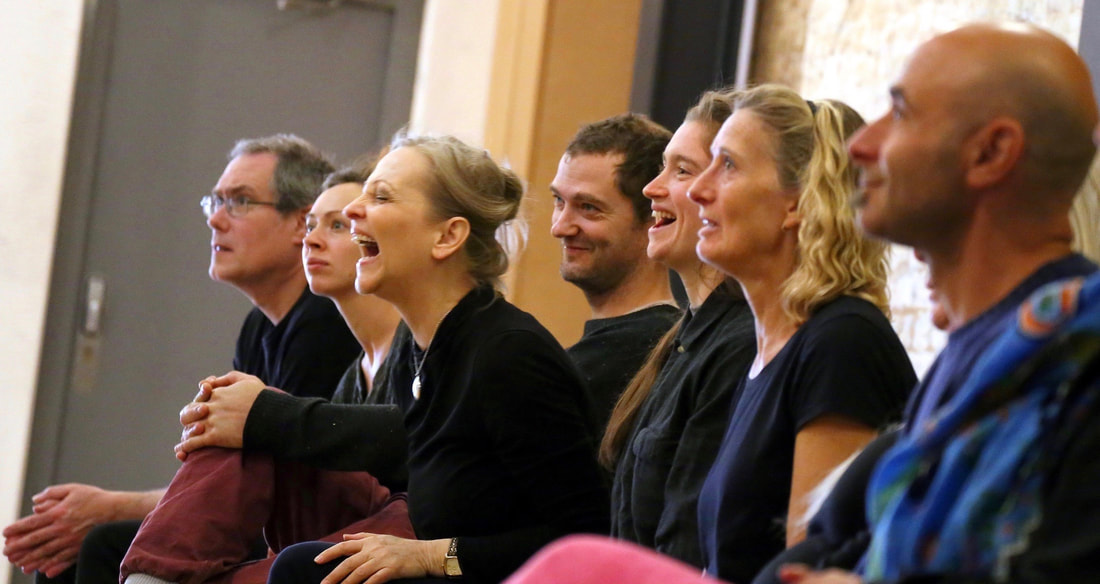
There is a rich range of reactions possible when witnessing the compelling Dark Clown work. 
Picture
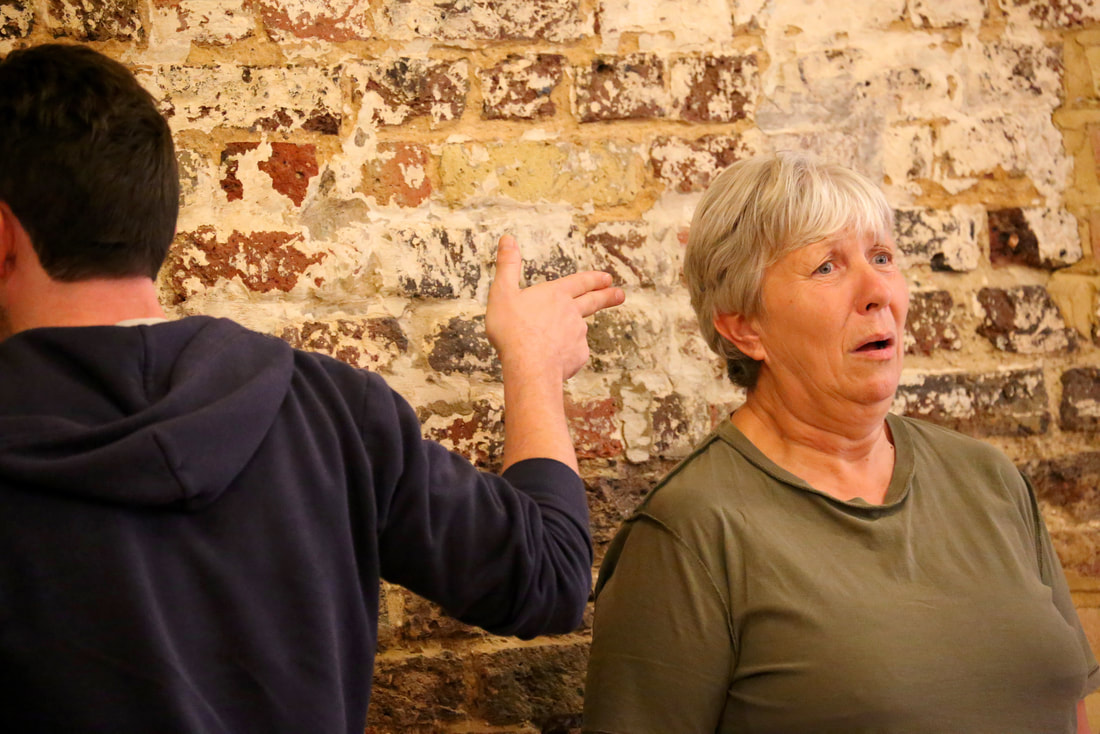
The work is carefully set up in an ethically held space - performers get a chance to invest imaginatively in High Stakes, where energy and expressivity is released. 

We are aiming for what I call 'Troubled Laughter' in the audience - laughter happens but it is not a laugh at. 'Troubled Laughter' does not trivialise or dismiss the suffering. The performers (course participants) -  aim to learn to implicate the audience. Done correctly, the audience laugh in a way that is either troubling or cathartic and often both at the same time.
Sometimes they veer between laughter and tears (and occasionally both at the same time).
Picture
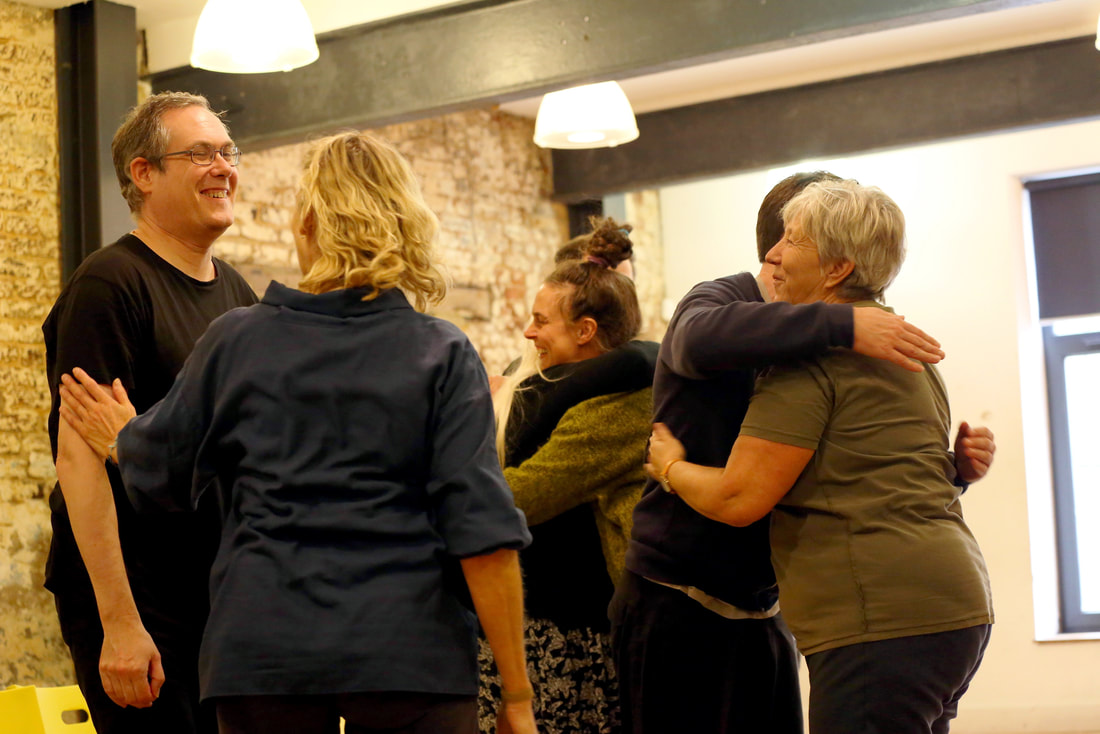
The joy of connection is nurtured during the process.
Picture
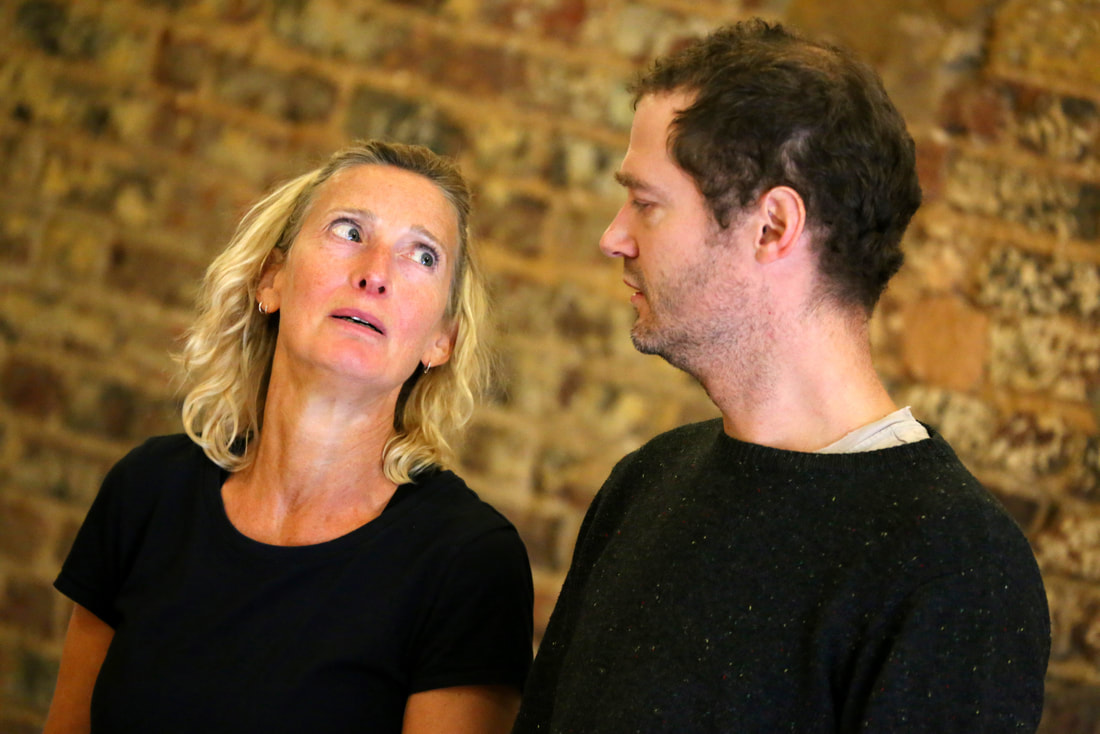
Many return to repeat the course - describing it as 'challenging and rewarding in equal measure'.

Maybe also have a look here.
Picture
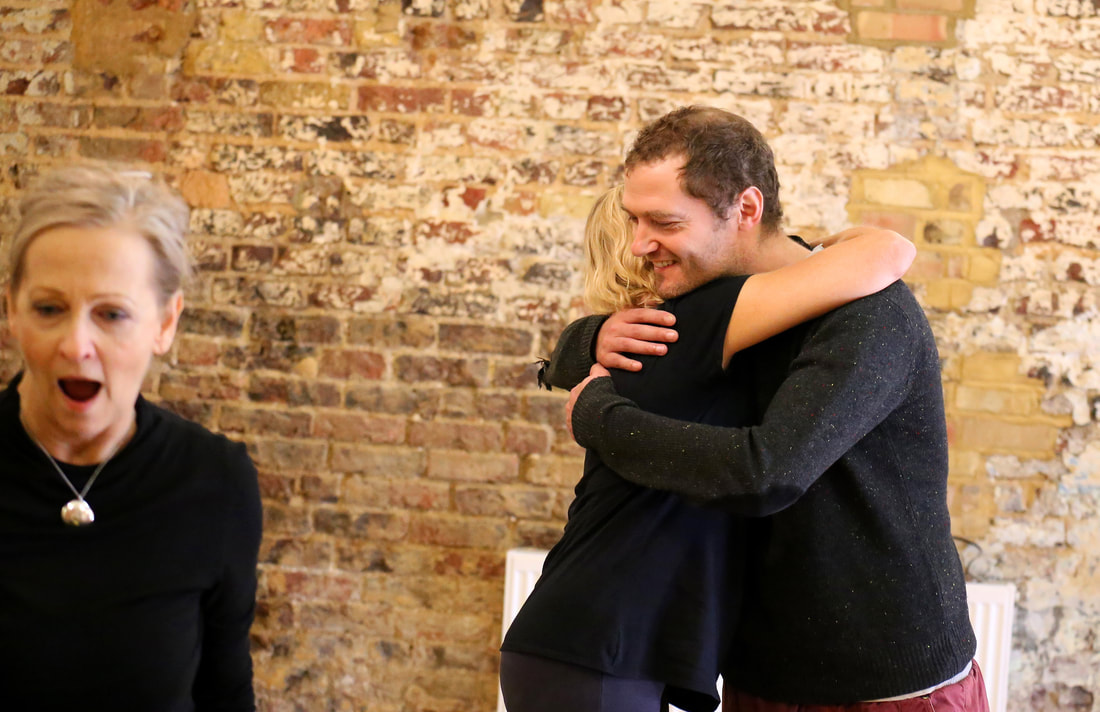
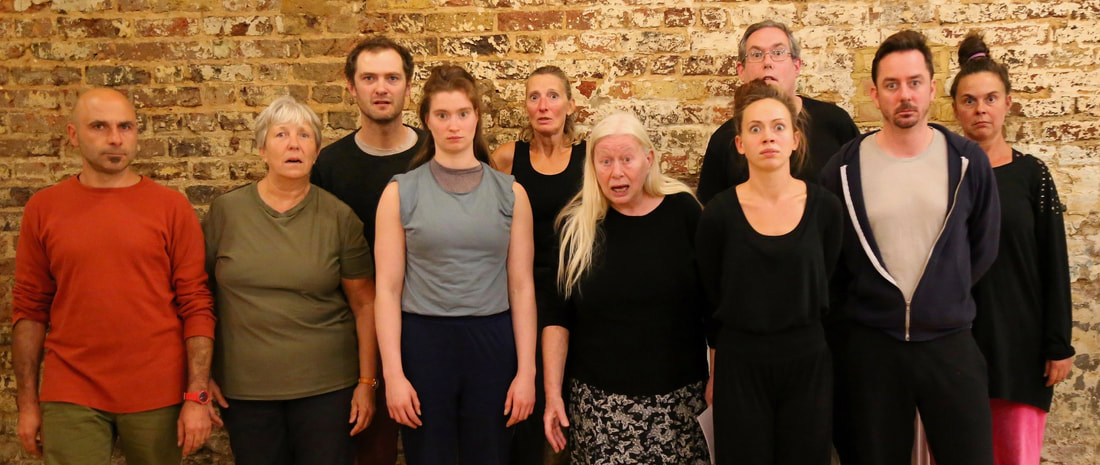
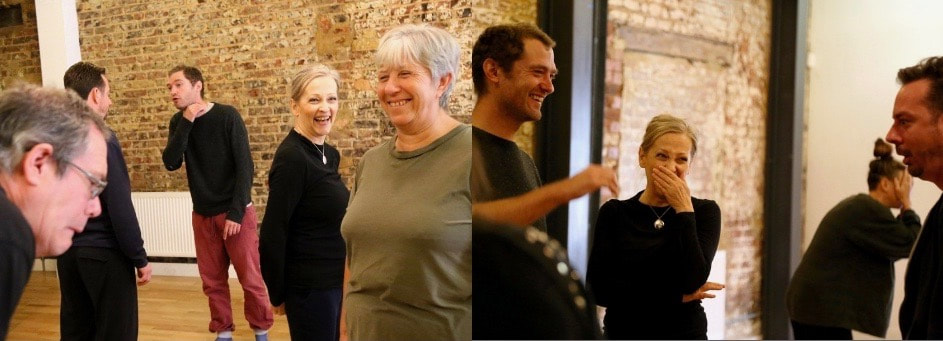
These images by Robert Piwko Photography - highly recommended.
0 Comments
Forward>>

    SEARCH by Category - scroll below

    This blog covers my Clown, Dark Clown, Comedy, and Theatre Making practices.

    ​Buy me a Ko-fi?
    I am writing a book on Dark Clown. If you enjoy the posts here, I'd love your support on my Ko-fi page. Your donation - even a small one - will help pay for time, editors, proof readers, books to inform context etc.
    ​ Thank you!
     

     https://ko-fi.com/petalily 

    30 years of practical research has created a new genre: Dark Clown. The Comedy of Terrors - Dark Clown & Enforced Performance was delivered at Bath Spa University. The work is cited in Clown (readings in theatre practice) by Jon Davison.
    ​

    Images above: Tiff Wear, Robert Piwko, Douglas Robertson, PL and Graham Fudger. Illustration by
    Charlotte Biszewski. Mask: Alexander McPherson.

    Categories

    All
    Absurd
    Absurdity
    Absurd Theatre
    Acceptance
    Accept Everything
    Acting
    Actioning
    Actions
    Adaptation
    Adrenal Surge
    Adversity
    Aesthetic
    All Over Lovely
    Amygdala
    Anais NIn
    An Die Musik
    Archetypes
    Aristotle's Poetics
    Arnold Mindell
    Audience
    Autobiographical Theatre
    Avner The Eccentric
    Awareness
    Backstory
    Bafflement
    Beats
    Believable Verisimilitude Of Pain And Distress
    Benefits To The Actor
    Big And Small
    Bim Mason
    Body Mask
    Bouffon
    Breath
    Breathing
    Brene Brown
    Buster Keaton
    Buzzer Exercise
    Calibration
    Call And Response
    Carlo Boso
    Carthasis Of Laughter
    Casting The Net
    Catharsis
    Chaplin
    Character
    Charlie Brooker
    Chastity Belt
    Chinese Clown
    Choric
    Circo-therapy
    Circus
    Circus Lumiere
    Claire Dowie
    Clock
    Clown
    Clown Council Process
    Clown & Dark Clown
    Clown & Dark Clown Course
    Clown Doctors
    Clown Dramaturgy
    Clown Egg Register
    Clown Genius
    Clown Jokes
    Clown Logic
    Clown Poem
    #clown #poem #clownpoem #dignity #transform
    Clown Power Symposium
    Clown Professor
    Clowns
    Clown State
    Clown State Process
    Coat-of-arms
    Colin Watkeys
    Comedy
    Comedy Craft
    Commedia
    Commedia Dell'arte
    Compassion
    Conditions For Comedy
    Confessional Theatre
    Conflict And Pain
    Consent
    Consumer Guilt
    Content Awareness
    Contrast
    Controller
    Corpsing
    Costume
    Costume Design
    Costume Embodiment
    Coulraphobia
    Courage
    Covid
    Creativity
    Crying
    Crystal Lil
    Curiousity
    Curriculum
    C-words
    Dark Clown
    Dark Clown Documentary
    Dark Clown Dramaturgy
    Dark Clown Poem
    Dark Clown Scenario
    Dark Clown Scenarios
    Dark Side Play
    Dave Pickering
    Deadpan
    Declan Donnellan
    Design
    Devising
    Dignity
    Dina Glouberman
    Discomfort
    Distance
    Documentary
    Dramaturgy
    Electro-pop
    Embodied Performance
    Embodiment
    Emotions
    Empathy
    Enforced Performance
    Ensemble
    Ethos
    Evil Laughter
    Exaggeration
    Extraordinary Physiological Response
    Facilitation
    Factory Of Noises
    Failure
    Failure As Success
    Fairytale
    Feminist Clown
    Fixed Point
    Flow
    Fool
    Fox And Maiden
    Game With The Audience
    Gaulier
    Gender
    Genres
    Getting Your Message Across
    Half-Masks
    Hamlet
    Hamlet Or Die
    Happenstance
    Hara
    Heart
    High Stakes
    High Stakes Predicament
    High Stakes Predicaments
    Honesty
    Horror
    How Not To Laugh
    Humanity
    Humanity In Extremis
    Hybrid Clown
    Hyper-vigilance
    I Am A Timebomb
    Imagework
    Imaginary Circumstances
    Immersion
    Implicate The Audience
    Implication
    Impossible Choices
    Impro. Clown. Clown State
    Impulse
    Impulses
    Inner Critic
    Innocence
    Inspirations
    Intention Of The Dark Clown Work
    Interview
    Interviews & Auditions
    In The Now
    Intuition
    Invocation
    It
    Jean Genet
    John Towsen
    Journals
    Jung
    Keith Johnstone
    Key Concepts
    King Lear
    Laugh At
    Laughing Gear
    Laughter
    Laughter Nudge
    Laughter To Implicate
    Learning
    Learning Lines
    Le Bide
    Line Up Exercise
    Line-up Exercise
    Lisa Wolpe
    Lumiere & Son
    Mamet
    Marginalised Emotions
    Marx Brothers
    Mask
    Mask State
    Metaphor
    Metaphors
    Methodology
    Mime
    Mine The Predicament
    Monika Pagneaux
    Monika Pagneux
    Motif
    Motifs
    Music
    Name Game
    Negative Emotions
    NLP
    Normal Audience
    Not Being Seen
    'not Doing'
    Okidok
    Olly Crick
    One Action
    Pain
    Pantalone
    Pantomime
    Pantomime Blanche
    Pedagogy
    Pema Chodron
    Pennywise
    Performance
    Perseverance
    Perspectives
    Peter A Levin
    Philippe Gaulier
    Physical Comedy
    Physical Expression
    Physical Theatre
    Pip Simmonds
    Play
    Play-possibilities
    Plot And Character
    Poetry
    Pop
    Power
    Predicament
    Predicaments
    Preparation
    Process
    Production
    Proprioception
    Props
    Red Nose Clown
    Rehearsal
    Repetition
    Resonances
    Reviews
    Rhythm
    Ridiculous
    Roger Rabbit
    Rough Puppetry
    Rule Of Three
    Rumi
    Running Gags
    'sad Normals'
    Sad Normals
    Satire
    Saving Private Ryan
    Sedona Method
    See The Cost
    Self-casting
    Self Compassion
    Set Piece
    Shakespeare
    Shame
    Shows
    Sobbing
    Solo
    Solo Theatre
    Stakes
    Stand Up Theatre
    Stand-up Theatre
    Storytelling
    Strange Forces
    Strategic Play
    Sufferring
    Take It Further
    Taking Laughter To The Limits
    Tarot
    Teaching
    Teaching Hygeine
    Teaching Statements
    Techniques
    TED Talk
    Theatremaking
    The 'bide'
    'The Circus'
    The Comedy Of Errors
    The Cost
    The Death Of Fun
    The Fool
    The Guard
    The Little Mermaid
    The Maids
    The Menu
    The Revenger's Tragedy
    Three Women
    Tibetan Buddhism
    Time Bomb
    Timing
    Tips
    Tips For Learning Lines
    'Tis Pity She's A Horse
    'Tis Pity She's A Whore
    Tonglen
    Topless
    Torture Over Ten Feet
    Tragedy
    Transparent Teaching
    Trauma
    Trickster
    Trigger Warmings
    Trilogy
    Troubled Laughter
    Truth & Fiction
    Truth & Lies
    Truth + Pain
    Upset
    Upset Procedure
    Useful Principles
    Use Your Senses
    Viola Spolin
    Vulnerability
    Warmup
    Wendy Darling
    'what If'
    Witness
    Women And Clowning
    Women Clowns
    Workout
    Writing
    Yoshi Oida
    Zen

    Archives

    December 2024
    September 2024
    December 2023
    October 2023
    August 2023
    October 2022
    July 2022
    June 2022
    February 2022
    September 2021
    May 2021
    April 2021
    March 2021
    August 2020
    July 2020
    June 2020
    May 2020
    April 2020
    March 2020
    February 2020
    December 2019
    August 2019
    June 2019
    March 2019
    November 2018
    September 2018
    March 2018
    January 2018
    October 2017
    September 2017
    August 2017
    June 2017
    May 2017
    April 2017
    February 2017
    January 2017
    September 2016
    July 2016
    February 2016
    January 2016
    November 2015
    September 2015
    August 2015
    July 2015
    June 2015
    May 2015
    April 2015
    March 2015
    February 2015
    January 2015

    RSS Feed

workshops & shows 

Hi dear folk! 
Just wrangled a technical problem - if you don't receive a 'welcome to the mailing list' within 7 days - please email petalily[at]gmail.com

Join Peta Lily Theatre Workshops on Facebook

Like Peta Lily Shows on Facebook

Follow @peta_lily on Twitter

Follow @petalily on Instagram

Curious about Dark Clown? get your FREE ebooklet when you sign up to the mailing list - see the form to the right!

Something else? If you are looking for a director / creative mentor / workshop leader for a bespoke workshop for your company or organisation or any other matter - go here.

* By signing up to the mailing list you agree to receive mailings about workshops, shows, publications and very occasionally other news, usually only about a half dozen mailouts a year. You can always choose to unsubscribe at any time – there is an unsubscribe link to click on in each email I send. Your information will not be shared with any third party.

Picture

    JOIN THE MAILING LIST & GET YOUR FREE ebooklet - 2020 extended version

    * By signing up to the mailing list you agree to receive mailings about workshops, shows, publications and very occasionally other news. Your information will not be shared with any third party.
    iCloud email addresses don't always work with the mailing system - and, IMPORTANT -please double check you input your email address correctly - if there's a typo I cannot contact you. AND - be sure to tick and click after the Comment box!
    iCloud email addresses don't always work with the mailing system - and IMPORTANT please be sure not to make a typo when inputting your email address.
    Be sure to tick the box and click submit below.
Submit